Most drivers discover their coolant has failed the hard way: stranded in a parking lot with steam pouring from under the hood or facing a repair bill for freeze damage that could have been prevented. Fresh coolant protects your engine down to negative 34°F, but contaminated fluid can freeze at just 20°F, turning a routine Michigan winter into a mechanical disaster. Grand Pointe Automotive has seen the aftermath of neglected cooling systems throughout Grand Blanc, Flint, and Burton. Old coolant becomes acidic, plastic components become brittle, and one cold night destroys what preventive maintenance could have saved.
We’ll show you how coolant degrades, which symptoms demand immediate attention, and why professional service goes beyond draining and refilling your radiator.
The Hidden Chemistry Behind Winter Coolant Failure
Most drivers know coolant prevents freezing, but few understand the complex chemistry that makes it work or how quickly it degrades under Michigan’s harsh conditions.
What Fresh Coolant Does
Your coolant is a carefully engineered mixture that performs multiple critical functions:
- Temperature regulation: Maintains optimal engine temperature between 195°F and 220°F
- Freeze protection: Lowers the freezing point to negative 34°F or lower
- Boil-over prevention: Raises the boiling point to prevent steam pockets
- Corrosion inhibition: Protects metal surfaces from rust and deterioration
- Lubrication: Keeps water pump seals working smoothly
The Breakdown Timeline
Here’s what happens as your coolant ages:
- Year 1-2: Additive package begins depleting. Protection remains adequate, but corrosion inhibitors start weakening.
- Year 3-4: Significant additive depletion occurs. The freezing point rises by 5-10 degrees. Acid formation begins attacking metal and plastic components.
- Year 5+: Year 5+: Critical failure zone. Coolant may freeze at 20°F instead of negative temperatures. Rust particles circulate through the system, clogging narrow passages.
The problem accelerates in winter because temperature cycling between freezing nights and warm running temperatures stresses every component repeatedly.
Why Plastic Components Are Winter’s First Victims
Modern vehicles replaced heavy brass and copper radiators with lightweight plastic decades ago. These components work brilliantly when protected by fresh coolant, but become brittle time bombs when coolant degrades.
Water expands roughly 9% when it freezes. In a confined cooling system, this creates tremendous pressure that cracks plastic radiator end tanks, splits thermostat housings, ruptures expansion tanks, and separates heater core tubes. We’ve seen vehicles towed to our 11-bay facility with cracked radiators after just one brutal Michigan night because contaminated coolant froze solid.
Old coolant becomes acidic as additives break down, attacking components from inside:
- Metal components: Engine block passages develop pinholes, radiator cores corrode through
- Plastic weakens: Acid makes plastic brittle and prone to stress cracks
- Seals deteriorate: Rubber hoses lose flexibility, gaskets shrink, and leak
Fresh vs. Old Coolant: What’s Really at Stake
Understanding the difference between maintained and neglected cooling systems helps you make informed decisions about service timing.
| Coolant Condition | Freeze Protection | Corrosion Protection | System Impact | Failure Risk |
| Fresh (0-2 years) | Down to -34°F | Full additive package active | Clean passages, optimal flow | Minimal |
| Aging (3-4 years) | Down to -10°F to -20°F | Partial protection remaining | Minor deposits forming | Moderate |
| Neglected (5+ years) | May freeze at 15°F-20°F | Minimal to none | Heavy contamination, restricted flow | High |
| Severely degraded | Can freeze at 32°F | Actively corroding | Clogged passages, failed components | Critical |
Cooling System Red Flags Every Michigan Driver Should Know
Your vehicle communicates cooling system problems through specific symptoms. Recognizing these early prevents catastrophic failures.
Visible Problems
- Puddles under your vehicle: Bright green, orange, or pink fluid means coolant is escaping
- Crusty deposits: White or colored residue around hoses and radiator indicates slow seepage
- Steam from the hood: Visible vapor means coolant is boiling or spraying onto hot components
- Temperature gauge climbing: Higher-than-normal readings signal cooling problems
Performance and Smell Changes
- The heater is blowing lukewarm air instead of hot air
- Fluctuating temperature readings during steady driving
- Sweet maple syrup smell inside or outside the vehicle
- Contaminated coolant appearance with rust or floating particles
- Check engine light with overheating codes
Why Grand Blanc’s Temperature Swings Destroy Cooling Systems Faster
Michigan’s dramatic temperature swings create unique challenges that accelerate cooling system wear faster than in moderate climates.
Consider a typical winter week in Grand Blanc Township: Your engine sits at 10°F overnight, then heats to 200°F within minutes of starting. This 190-degree swing stresses every joint and seal. The next night drops to -5°F, where weak coolant partially freezes, expanding in your radiator and testing every seam. This constant expansion and contraction works like bending a paper clip repeatedly until something breaks.
Fresh coolant with proper freeze protection prevents the expansion that causes damage.
What Professional Coolant Service Involves
A proper coolant flush goes far beyond draining old fluid and adding new antifreeze. Professional service addresses contamination, leaks, and component conditions.
Comprehensive System Inspection
Visual examination:
- Radiator cap pressure rating and seal condition
- All hoses for cracks, soft spots, or bulging
- Clamps and connections for corrosion
- Belts are driving the water pump
- Radiator fins for damage or blockage
Testing reveals:
- Hidden leaks under operating pressure
- Current freeze protection level
- pH balance showing acid formation
- Contamination from rust or oil
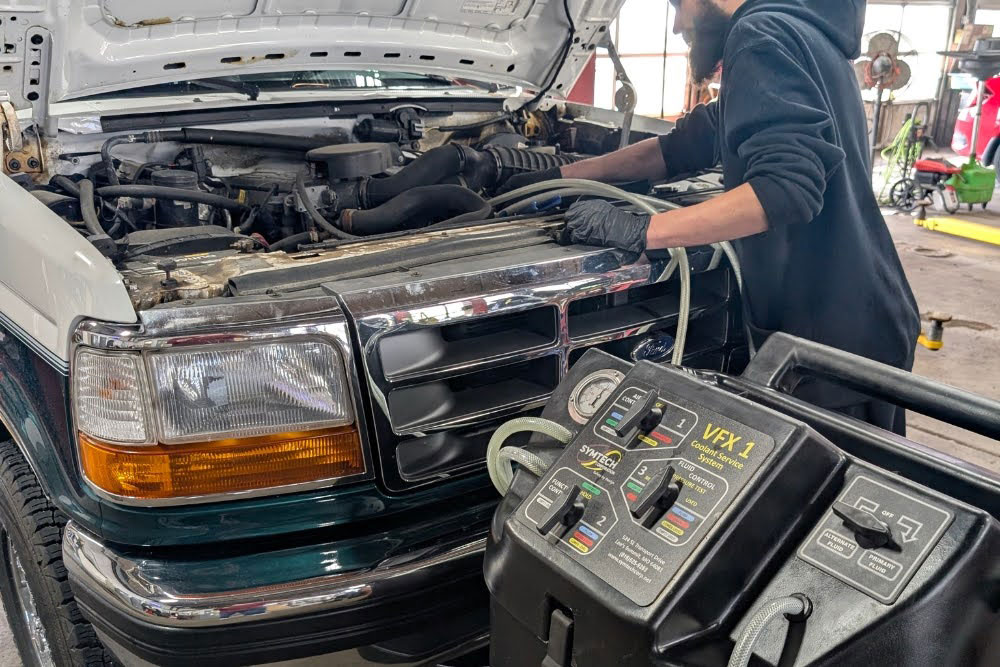
The Professional Flush Process
- Drain contaminated coolant from the radiator and engine block
- Circulate the cleaning solution through the entire system
- Flush with clean water until discharge runs clear
- Refill with proper coolant type mixed to the manufacturer’s specifications
- Bleed air pockets that reduce cooling efficiency
- Pressure test to verify leak-free operation
- Road test to confirm proper temperature regulation
Ready to protect your vehicle before winter takes its toll? Schedule your coolant system inspection today at Grand Pointe Automotive, 5140 S Saginaw Rd, Grand Blanc Township, MI 48507, or call 810-603-1900.
Why Grand Blanc Drivers Choose Grand Pointe Automotive for Coolant Service
When your vehicle needs cooling system attention, expertise, and equipment, make the difference between proper repair and repeated failures.
Our qualifications:
- ASE and state master-certified technicians with extensive cooling system experience
- Advanced diagnostic equipment, including Snap-on and Autel scanners
- Tekmetric digital vehicle inspections show exactly what your system needs
- 3-year, 36,000-mile warranty on repairs
- Specialization in GM, Ford, and Chrysler vehicles is common throughout Genesee County
Your convenience matters:
- Free loaner vehicles keep you mobile during repairs
- Vehicle pick-up and delivery service available
- Prompt service and convenient scheduling for your cooling system needs
- Transparent communication through digital inspections
We’ve served drivers throughout Grand Blanc, Flint, Burton, and Atlas since 1950. Other shops in the area send us their toughest diagnostic challenges because our technicians have the experience and tools to solve complex cooling system problems.
Essential Winter Coolant Care for Genesee County Drivers
Monthly checks:
- Inspect the coolant level when the engine is cold
- Look for visible leaks or stains under the vehicle
- Check the reservoir for contamination
Before winter:
- Test the heater output on the maximum setting
- Verify the temperature gauge operates normally
- Inspect accessible hoses for damage
What to avoid:
- Never add plain water to your cooling system
- Don’t mix different coolant types
- Never open the radiator cap on a hot engine
FAQs About Coolant Flushes and Winter Maintenance
How often should I get a coolant flush in Michigan?
Most vehicles need a coolant flush every 30,000 to 50,000 miles, though some newer vehicles with long-life coolant can go up to 100,000 miles. Michigan’s extreme temperature swings and harsh winters can accelerate coolant degradation, so having your system tested annually ensures you have adequate protection when temperatures drop.
What happens if you don’t flush your coolant before winter?
Old coolant loses its ability to prevent freezing, which can cause the fluid to freeze inside your engine and radiator. Frozen coolant expands and cracks plastic components, splits hoses, and can damage the engine block. Contaminated coolant also becomes acidic, corroding metal parts and creating leaks throughout the cooling system.
Can coolant freeze in cold weather?
Yes, coolant can freeze if it’s old, contaminated, or mixed at the wrong concentration. Fresh coolant properly mixed for your climate should protect down to negative 34°F or lower. As coolant ages, its freezing point rises significantly, leaving your engine vulnerable even at temperatures well above zero degrees.
How do I know if my radiator needs service or repair?
Watch for visible leaks, overheating, coolant level drops, or a sweet smell near your vehicle. A crusty white or green residue around hoses and the radiator indicates seepage. If your temperature gauge reads higher than normal or your heater doesn’t blow hot air, your radiator or cooling system needs professional inspection.
What are the signs of a coolant leak in freezing temperatures?
Look for puddles under your vehicle after it’s parked overnight, steam from under the hood, a sweet smell inside or outside the car, or visible coolant on engine components. White exhaust smoke or rapid coolant level drops also indicate leaks. Freezing temperatures make leaks worse because ice expansion cracks already-weakened components.
Schedule Your Coolant Flush in Grand Blanc, MI Today
Don’t wait until freezing temperatures damage your cooling system and leave you stranded. Protect your vehicle with professional coolant system service that prevents expensive repairs and keeps you moving safely through winter. Visit Grand Pointe Automotive at 5140 S Saginaw Rd, Grand Blanc Township, MI 48507, or call 810-603-1900 to schedule your coolant inspection. Our team is ready to provide the friendly, helpful, informative service that sets us apart.