When was the last time you thought about your brake fluid? If you’re like most Michigan drivers, the answer is probably never. Yet this overlooked fluid is all that stands between you and complete brake failure on icy Grand Blanc roads. Brake fluid absorbs moisture over time, and in Michigan’s salt-heavy winters, that contamination leads to internal corrosion, reduced stopping power, and dangerous vapor lock. At Grand Pointe Automotive, we recommend brake fluid flushes every two years to protect your family’s safety.
In this guide, we’ll explain how brake fluid works, why Michigan’s climate accelerates its degradation, what warning signs to watch for, and when professional brake service becomes critical. Understanding these factors could be the difference between a routine maintenance visit and a roadside emergency.
The Hidden Chemistry Behind Your Brakes
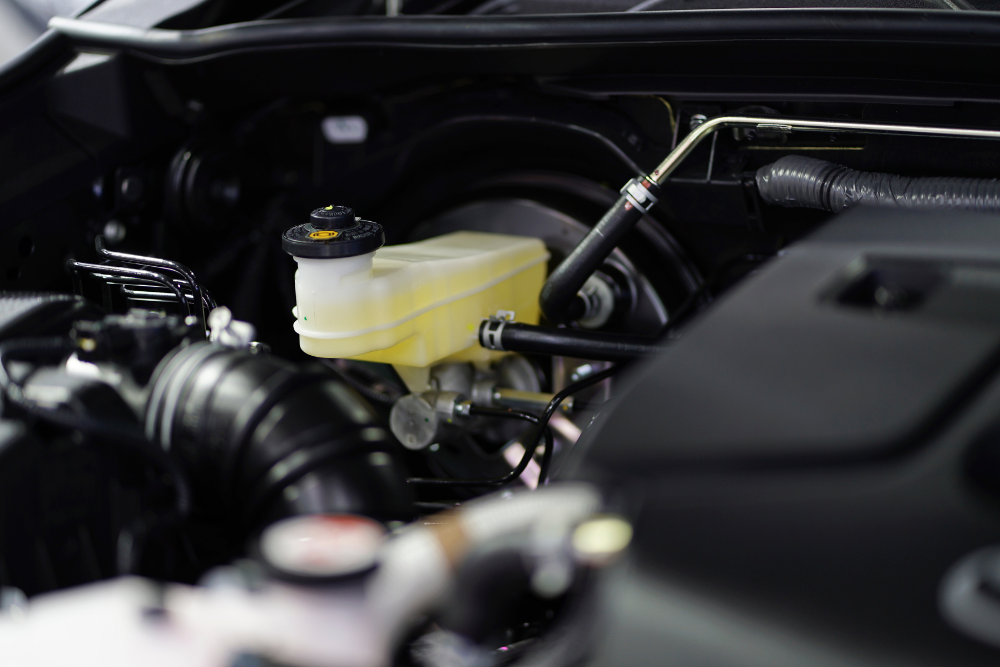
Brake fluid is the hydraulic liquid that transfers force from your brake pedal to your calipers, creating the friction needed to stop your vehicle. But here’s what makes brake fluid different from every other fluid in your car: it’s hygroscopic, meaning it actively absorbs moisture from the air over time.
This isn’t a design flaw. It’s intentional. Engineers designed brake fluid to absorb moisture so water doesn’t pool in one spot and cause localized corrosion. Instead, the moisture spreads throughout the system. The problem? Once brake fluid absorbs enough water, it becomes dangerous.
What Happens When Water Invades Your Brake Lines
Fresh brake fluid has a boiling point above 400°F. After two years of absorbing moisture, that boiling point can drop to 300°F or lower. During heavy braking, your brakes generate intense heat. If moisture-contaminated fluid reaches its lowered boiling point, it vaporizes and creates air bubbles, a condition called vapor lock.
The result: Your brake pedal feels spongy or goes straight to the floor. You pump the brakes, but nothing happens. This isn’t a movie scenario. It’s a real danger that happens on Michigan highways every year.
Why Michigan Winters Accelerate Brake Fluid Degradation
Michigan’s climate creates the perfect conditions for rapid brake fluid contamination. Our winters aren’t just cold, they’re a corrosive cocktail that attacks your brake system from multiple angles.
Moisture Absorption on Steroids
Between November and March, humidity combines with temperature swings to create condensation inside brake components. Your brake fluid can absorb moisture at nearly twice the normal rate during the winter months.
Salt’s Silent Attack
Road salt doesn’t just coat your vehicle’s exterior. Tiny salt particles enter your brake system through worn seals or during routine service. When salt mixes with moisture-contaminated brake fluid, it creates a highly corrosive solution that eats through metal brake lines, calipers, and the master cylinder from the inside out.
Temperature Swings Create Internal Condensation
When your vehicle sits outside overnight at 10°F, then warms up in a heated garage or during your commute, condensation forms inside brake components. This moisture drips into your brake fluid reservoir, starting a cycle of contamination that only gets worse with time.
Brake Fluid Flush Services in Grand Blanc, MI: The Two-Year Rule
Most automotive manufacturers recommend replacing brake fluid every two years, regardless of mileage. In Michigan’s harsh climate, this timeline isn’t just a suggestion; it’s critical for safety.
A proper brake fluid flush includes:
- Moisture Content Testing: Measuring current water content using specialized equipment
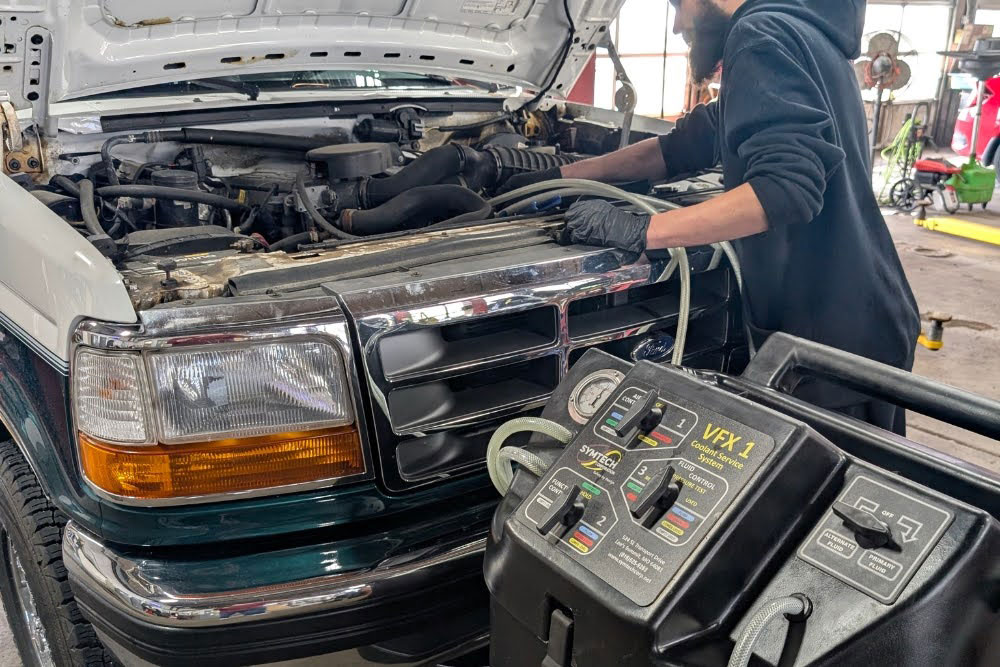
- Complete System Flush: Systematically removing old fluid from the master cylinder, brake lines, and calipers
- Air Removal: Bleeding all air from the system to ensure proper hydraulic pressure
- Component Inspection: Checking for signs of corrosion, leaks, or wear
- Performance Verification: Testing brake pedal feel and system response
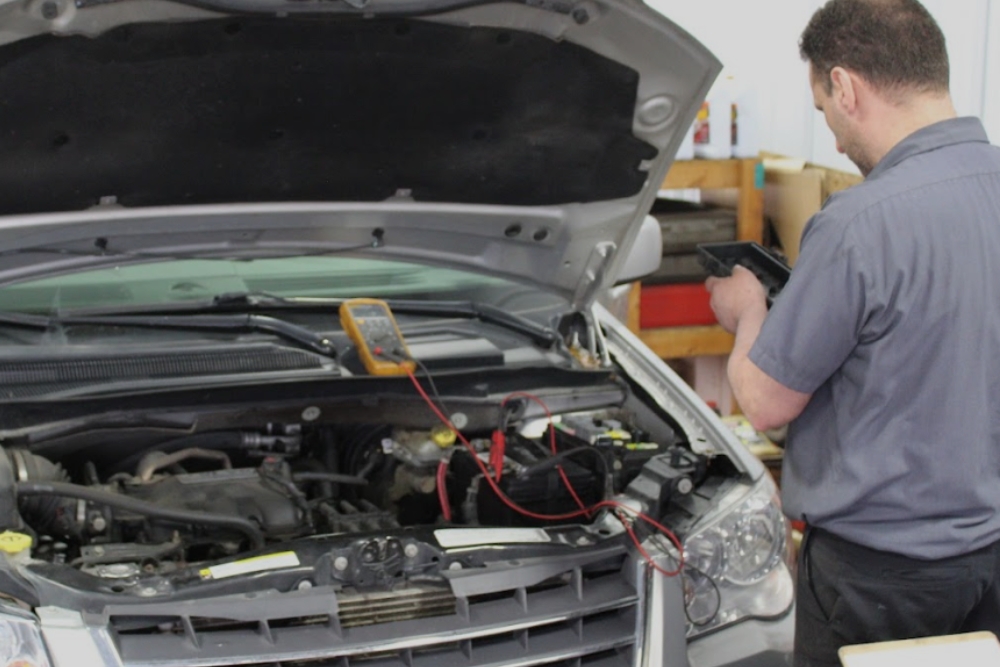
At Grand Pointe Automotive, we use factory-level scanning equipment for GM, Ford, and Chrysler vehicles to properly service advanced electronic brake systems, including ABS and stability control components. Our Snap-on and Autel diagnostic scanners ensure we can accurately diagnose brake system issues and verify proper operation after service.
Ready for a brake inspection? Visit us at Grand Pointe Automotive, 5140 S Saginaw Rd, Grand Blanc Township, MI 48507, or call 810-603-1900 to schedule your appointment.
Warning Signs Your Brake Fluid Is Failing
Your vehicle communicates when brake fluid needs attention. Recognizing these symptoms early prevents dangerous situations:
- Spongy or soft brake pedal: Most common sign of moisture contamination or air in the lines
- Brake pedal slowly sinks to the floor: Indicates internal leaks or severely degraded fluid
- Dark or discolored fluid: Fresh brake fluid is clear or light amber; contaminated fluid turns dark brown or black
- Extended stopping distances: Your vehicle takes longer to stop than usual
- Dashboard brake warning light: Modern systems monitor brake pressure and fluid level
- Burning smell during braking: Overheated, boiling brake fluid creates a distinct acrid odor
If you notice any of these symptoms while driving through Grand Blanc, Burton, or anywhere in Genesee County, schedule a brake inspection immediately.
Complete Brake Inspections in Genesee County: Beyond the Fluid
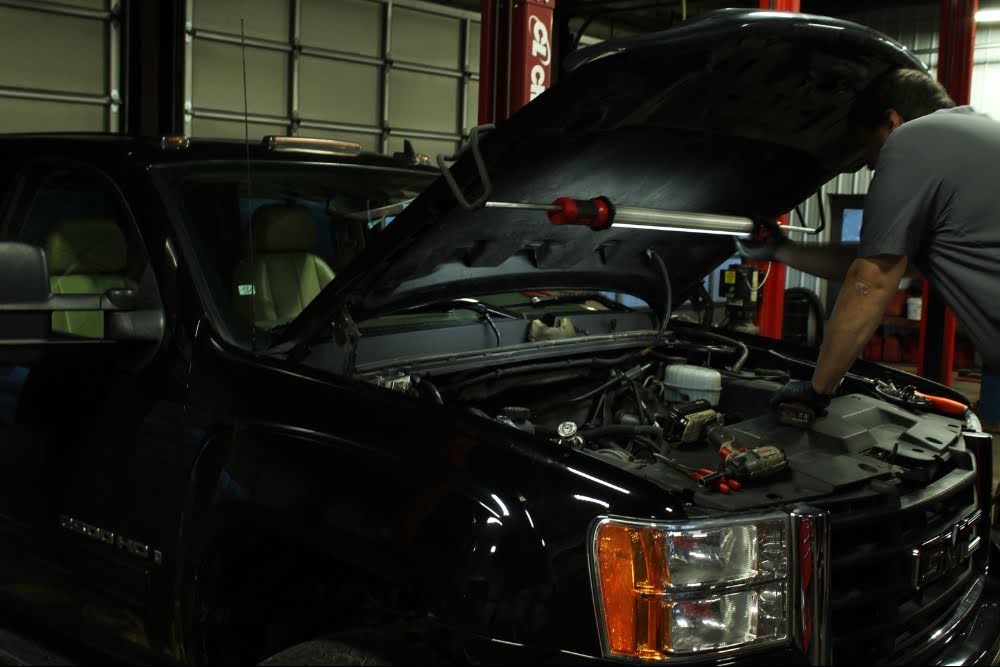
Brake fluid service is essential, but comprehensive brake maintenance examines every component of your system. Our state and ASE Master Certified Technicians inspect:
- Brake Pads and Rotors: Measuring pad thickness and rotor condition, checking for uneven wear patterns that indicate alignment or suspension issues.
- Brake Lines and Hoses: Inspecting metal brake lines for rust, damage, or salt corrosion. Rubber brake hoses are checked for cracks, swelling, or leaks.
- Calipers and Hardware: Verifying that calipers move freely, slide pins are properly lubricated, and brake hardware isn’t corroded or seized.
- Master Cylinder and Brake Booster: Testing the brake booster’s vacuum assist and inspecting the master cylinder for internal leaks.
Our Digital Vehicle Inspections document brake system condition with detailed photos, giving you clear visibility into your vehicle’s needs. This transparency reflects our core value: “Do The Right Thing” by providing honest, accurate service recommendations.
The Real Cost of Neglecting Brake Fluid
Here’s what most drivers don’t realize: the cost of neglecting brake fluid goes far beyond the price of the fluid itself. When moisture-contaminated fluid sits in your brake system for three, four, or five years, the damage compounds.
The Domino Effect of Corrosion:
- Year 1-2: Moisture absorption begins, fluid performance degrades slightly
- Year 3: Internal corrosion starts in brake lines and calipers
- Year 4: Corrosion causes pitting and weak spots in metal components
- Year 5+: Brake lines can rupture, calipers seize, ABS modules fail
A brake fluid flush every two years prevents costly brake component replacements. More importantly, it prevents the risk of brake failure at highway speeds or in emergencies.
Why Families Choose Grand Pointe Automotive for Brake Service
Since 1950, our family-owned shop has built a reputation in Grand Blanc Township for expert diagnostics and quality repairs. We understand that brake safety isn’t just about fixing problems, it’s about preventing them.
Our customer-oriented approach includes free loaner vehicles, free shuttle service, vehicle pick-up and delivery, and a large comfortable waiting room with a kids’ play area. We back all brake services with our 3-year, 36,000-mile warranty, giving you confidence in every repair.
FAQs About Brake Fluid and Winter Brake Safety
Why is brake fluid important for safe winter driving?
Brake fluid is critical for winter safety because it transfers hydraulic pressure to your brakes, and moisture contamination can cause brake failure in cold conditions. Fresh fluid maintains proper boiling point and prevents corrosion that compromises braking performance on icy roads.
How often should you flush brake fluid in Michigan?
You should flush brake fluid every two years in Michigan due to accelerated moisture absorption from humidity, road salt exposure, and temperature extremes. Regular replacement prevents internal corrosion and maintains reliable brake performance through harsh winters.
What happens if you don’t change your brake fluid regularly?
If you don’t change brake fluid regularly, moisture contamination lowers the boiling point, causing vapor lock and brake fade during heavy use. Internal corrosion damages expensive brake components like calipers, master cylinders, and ABS modules, requiring costly repairs.
Can cold weather affect brake performance?
Cold weather can affect brake performance by reducing brake pad friction, especially during the first few stops after starting your vehicle. Moisture-contaminated brake fluid is also more likely to experience issues in extreme cold, though proper fluid maintenance prevents serious problems.
What are the signs your brakes need to be inspected?
Signs your brakes need inspection include spongy pedal feel, grinding or squealing noises, longer stopping distances, vibration when braking, or dashboard warning lights. Any unusual brake behavior requires immediate professional evaluation to ensure safe operation.
Schedule Your Brake Fluid Flush in Grand Blanc, MI Today
Don’t wait for brake problems to compromise your family’s safety this winter. Whether you need a routine brake fluid flush, a complete brake inspection, or brake repair services, Grand Pointe Automotive’s expert team is ready to help.Ready to protect your vehicle and loved ones? Visit Grand Pointe Automotive at 5140 S Saginaw Rd, Grand Blanc Township, MI 48507, or call 810-603-1900 to schedule your brake service appointment. Serving Grand Blanc, Burton, Atlas, and all of Genesee County, we keep you moving.