If you’ve ever sat in your driveway on a cold Michigan morning, turning the key only to hear a slow, laboring crank or complete silence, you’re not alone. Winter car starting issues are one of the most frustrating problems drivers face when temperatures drop. The good news? Understanding why your car struggles in freezing weather can help you prevent being stranded. At Grand Pointe Automotive in Grand Blanc Township, our Master Certified technicians diagnose and resolve cold-weather starting problems every winter, helping families across Genesee County stay mobile when they need it most.
Why Michigan Winters Are So Hard on Car Batteries
Your car battery isn’t just sitting there waiting to start your engine. It’s a chemical reactor, and like any chemical process, it slows down dramatically when temperatures plummet. At 32 degrees Fahrenheit, your battery loses about 35% of its strength. When the thermometer hits zero, that loss jumps to a staggering 60%.
Here’s where things get interesting. While your battery is getting weaker, your engine is getting harder to start. Cold oil turns into thick sludge, creating massive resistance. Your starter motor has to work two to three times harder to turn over the engine, drawing more power from a battery that’s already operating at half capacity.
Think of it like this: Imagine trying to run through waist-deep water while carrying a heavy backpack. That’s essentially what your car’s electrical system faces every freezing morning.
Most batteries last three to five years under normal conditions, but Michigan winters aren’t normal. The constant freeze-thaw cycles, road salt exposure, and extreme temperature swings can cut that lifespan significantly.
What Your Battery is Telling You
Your car sends warning signals long before it leaves you stranded. Learning to read these signs can save you from a frustrating cold-morning breakdown.
Early Warning Signs:
- Slow Engine Cranking: The starter turns over sluggishly, especially on the first start of the day
- Dimming Dashboard Lights: Gauges and warning lights fade when you attempt to start
- Clicking Sounds: Rapid clicking indicates insufficient power reaching the starter
- Electrical Quirks: Radio presets disappear, clock resets, or power accessories act strangely
- Age Factor: Any battery over three years old in Michigan should be tested annually
The problem is that these symptoms often appear gradually. You might not notice the starter cranking slightly slower each week until one morning it doesn’t crank at all.
The Overnight Battery Drain Mystery
Many drivers experience a puzzling situation where their car starts fine in the afternoon but won’t start the next morning. This happens because overnight temperatures drop significantly, and any parasitic drain on your battery becomes critical. Modern vehicles have dozens of computers that draw small amounts of power even when off. Combined with a weak battery and sub-freezing temperatures, eight hours can be enough to prevent starting.
Battery Terminal Corrosion: A Common Problem for Grand Blanc Township Drivers
That crusty, powdery buildup around your battery posts isn’t just ugly. It’s actively preventing your car from starting.
Battery corrosion forms when battery acid vapors react with the metal terminals. Winter accelerates this process because:
- Road Salt Exposure: Michigan’s heavily salted roads create a corrosive environment
- Temperature Fluctuations: Freeze-thaw cycles cause expansion and contraction
- Moisture Accumulation: Snow and ice melt creates constant wetness under the hood
- Chemical Reactions: Cold weather changes how battery acid behaves
The white, blue, or greenish substance you see is dried battery acid or lead sulfate. It acts like an insulator, blocking electrical flow between your battery and the rest of your vehicle. Even a brand-new battery can’t start your car if the connections are compromised.
Quick Visual Check: Look for any powdery or crusty buildup on the battery posts or cable connections. If you see corrosion, that’s likely contributing to your starting issues.
Battery Health vs. Charging System Issues: Know the Difference
| Symptom | Weak Battery | Charging System Problem |
| Cold Morning Start | Slow cranking or won’t start after sitting overnight | May start fine initially but dies while driving |
| After Jump Start | Runs fine once started | Dies again shortly after jump or won’t stay running |
| Electrical Behavior | Dimming lights during starting attempt | Dimming lights while driving or at idle |
| Dashboard Warning | Battery light may come on briefly at start | Battery light stays on while engine runs |
| Test Result | Low voltage at battery terminals | Good battery voltage but poor alternator output |
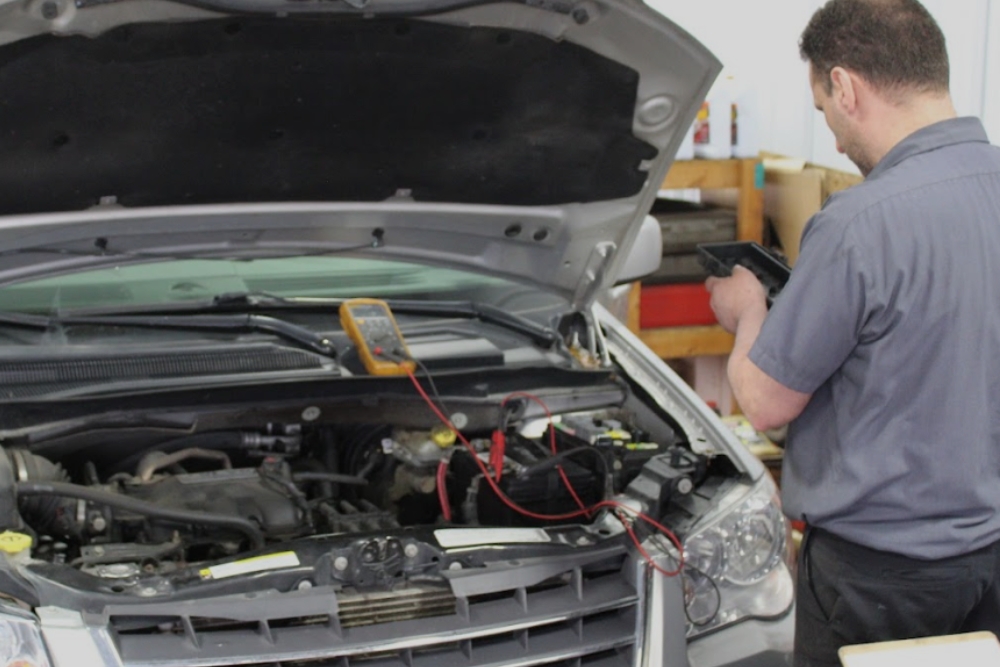
Understanding this difference is crucial. Many drivers replace a perfectly good battery when the real problem is a failing alternator that isn’t recharging it. Professional diagnostic testing measures both battery condition and alternator output under load, identifying the actual problem instead of guessing based on symptoms alone.
Concerned about your battery’s health? Stop by Grand Pointe Automotive at 5140 S Saginaw Rd, Grand Blanc Township, or call us at 810-603-1900 for comprehensive electrical system diagnostics.
Why Professional Battery Testing Beats the Parts Store
You’ve probably seen those free battery testing services at auto parts stores. While convenient, they have significant limitations. Most use simple testers that only measure voltage without applying a proper load test. A battery can show 12.6 volts on a basic meter but still fail under the heavy load of starting your engine.
What Comprehensive Testing Reveals:
- Cold Cranking Amps (CCA): The actual power available for starting in cold conditions
- Reserve Capacity: How long the battery can run your vehicle if the alternator fails
- Internal Resistance: Detects weak cells that voltage testing misses
- Load Performance: Measures output under conditions similar to actual starting
- Charging System Function: Verifies your alternator properly maintains battery health
This level of testing takes specialized equipment and training. It’s why shops that focus on complete electrical system diagnostics catch problems that simple voltage checks miss.
Real Solutions for Reliable Winter Starting in Genesee County
Prevention beats roadside repairs every time. Here’s your action plan for avoiding winter starting problems:
Before Winter Hits:
- Schedule battery testing if yours is over three years old
- Inspect terminals for any early signs of corrosion
- Verify your alternator is charging properly
During Winter Months:
- Take longer drives weekly to fully recharge your battery
- Park in a garage when possible to minimize temperature extremes
- Consider a battery maintainer if the vehicle sits unused for extended periods
When Problems Appear:
- Don’t ignore slow cranking or electrical quirks
- Address corrosion immediately before it worsens
- Get professional testing rather than waiting for complete failure
The difference between a reliable winter vehicle and one that leaves you stuck often comes down to addressing small issues before they become major problems.
Expert Battery Replacement and Auto Electrical Repair Services
When testing reveals it’s time for a new battery, quality installation matters as much as the battery itself. At Grand Pointe Automotive, our state and ASE-Master Certified technicians handle every battery replacement with comprehensive attention to your entire electrical system.
Our Complete Battery Service Includes:
- Thorough electrical system diagnostics using professional-grade equipment
- Testing of alternator output and voltage regulation under load
- Inspection and cleaning of all cable connections and terminals
- Application of protective coating to prevent future corrosion
We understand that busy families and working professionals across Grand Blanc, Burton, Flint, and Atlas can’t afford unexpected downtime. Our free loaner cars, shuttle service, and vehicle pick-up and delivery options mean you’re never without transportation.
Our 11-bay facility at 5140 S Saginaw Rd features Snap-on and Autel diagnostic scanners for precise electrical troubleshooting. When other shops in the area encounter hard-to-diagnose electrical issues, they often send those vehicles to us. That expertise, combined with our commitment to doing the right thing for every customer, has built our reputation since 1950.
FAQs About Winter Car Starting Issues and Battery Health
Why won’t my car start when it’s cold outside?
Cold weather reduces your battery’s available power by up to 60% while simultaneously making your engine harder to turn over due to thickened oil. This combination of decreased battery output and increased starting demand often results in slow cranking or complete failure to start.
How does cold weather affect a car battery?
Cold temperatures slow the chemical reactions inside your battery that produce electrical current, significantly reducing its cranking power. A battery that provides 100% power at 80 degrees might only deliver 40% at zero degrees.
How can I tell if my car battery needs to be replaced?
Warning signs include slow engine cranking, dimming headlights when starting, electrical accessories that work intermittently, or a battery that’s more than three years old. Professional load testing provides the most accurate assessment of battery health.
What’s the best way to keep my car starting in freezing weather?
Have your battery tested annually before winter, keep terminals clean and connections tight, avoid short trips that don’t fully recharge your battery, and address any electrical issues promptly. Regular maintenance prevents most cold-weather starting problems.
Can corroded battery terminals cause starting issues in winter?
Yes, corrosion creates electrical resistance that blocks current flow between your battery and starter motor. Even a healthy battery won’t start your car if the terminals are heavily corroded, and cold weather accelerates corrosion formation.
Schedule Your Battery Test in Grand Blanc Township Today
Don’t let winter catch you off guard with a dead battery and a car that won’t start. Our battery testing provides the information you need to make informed decisions about your vehicle’s readiness for Michigan’s harsh winter conditions.Ready to ensure reliable starting all winter long? Visit Grand Pointe Automotive at 5140 S Saginaw Rd, Grand Blanc Township, MI 48507, or call us at 810-603-1900 to schedule your free battery test. We proudly serve drivers throughout Genesee County with the expertise and customer care your family deserves. Let us help you avoid winter starting problems before they happen. We keep you moving, no matter how cold it gets.